Papers
Research Papers
Last updated: June 15, 2026
Morphology-resolved scrambling in a chaotic quantum billiard
Published: June 15, 2026
Abstract:
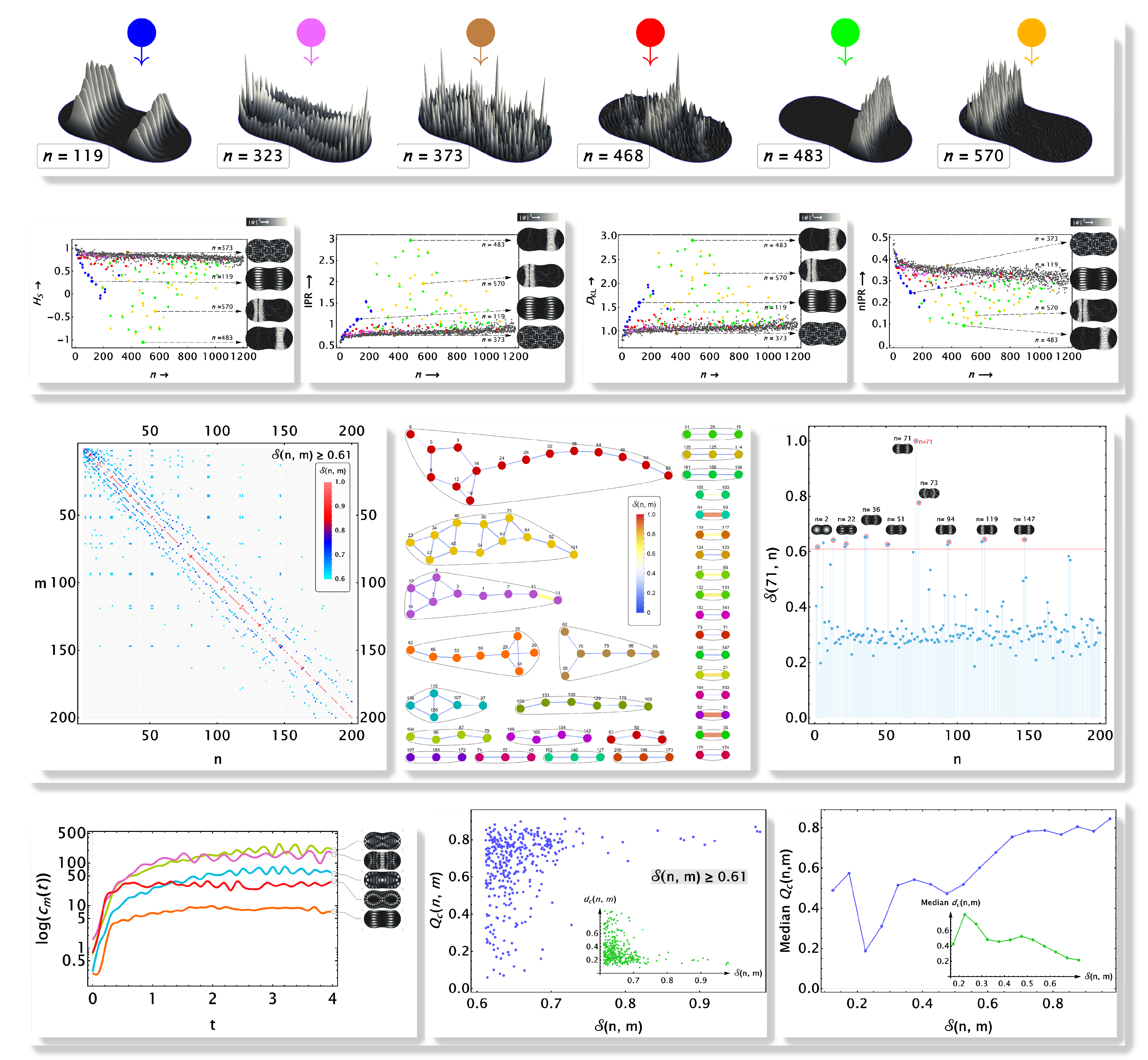
Chaotic quantum systems can retain spatial memory through scarred eigenstates, but whether these static structures control scrambling remains unclear. This work establishes a morphology-resolved connection between scarred eigenstates and eigenstate-resolved OTOCs in a peanut-shaped quantum billiard. Scalar localisation diagnostics, including differential entropy and continuum participation ratios, detect anomalous concentration but discard spatial architecture. A scale-normalised density overlap, in contrast, directly compares probability density profiles, revealing families of orthogonal eigenstates with nearly identical spatial morphology. Comparing the complete OTOC time traces of these orthogonal eigenstates reveals that morphological recurrence has dynamical content: moderate density overlap yields no universal prediction, whereas strongly recurring morphologies exhibit nearly identical OTOC growth and saturation. Thus, scarred structures act as spatial templates for operator growth, not merely static violations of ergodicity. This morphology-resolved framework turns eigenstate shape into a quantitative predictor of scrambling and provides a scale-controlled diagnostic of weak ergodicity breaking in quantum chaos.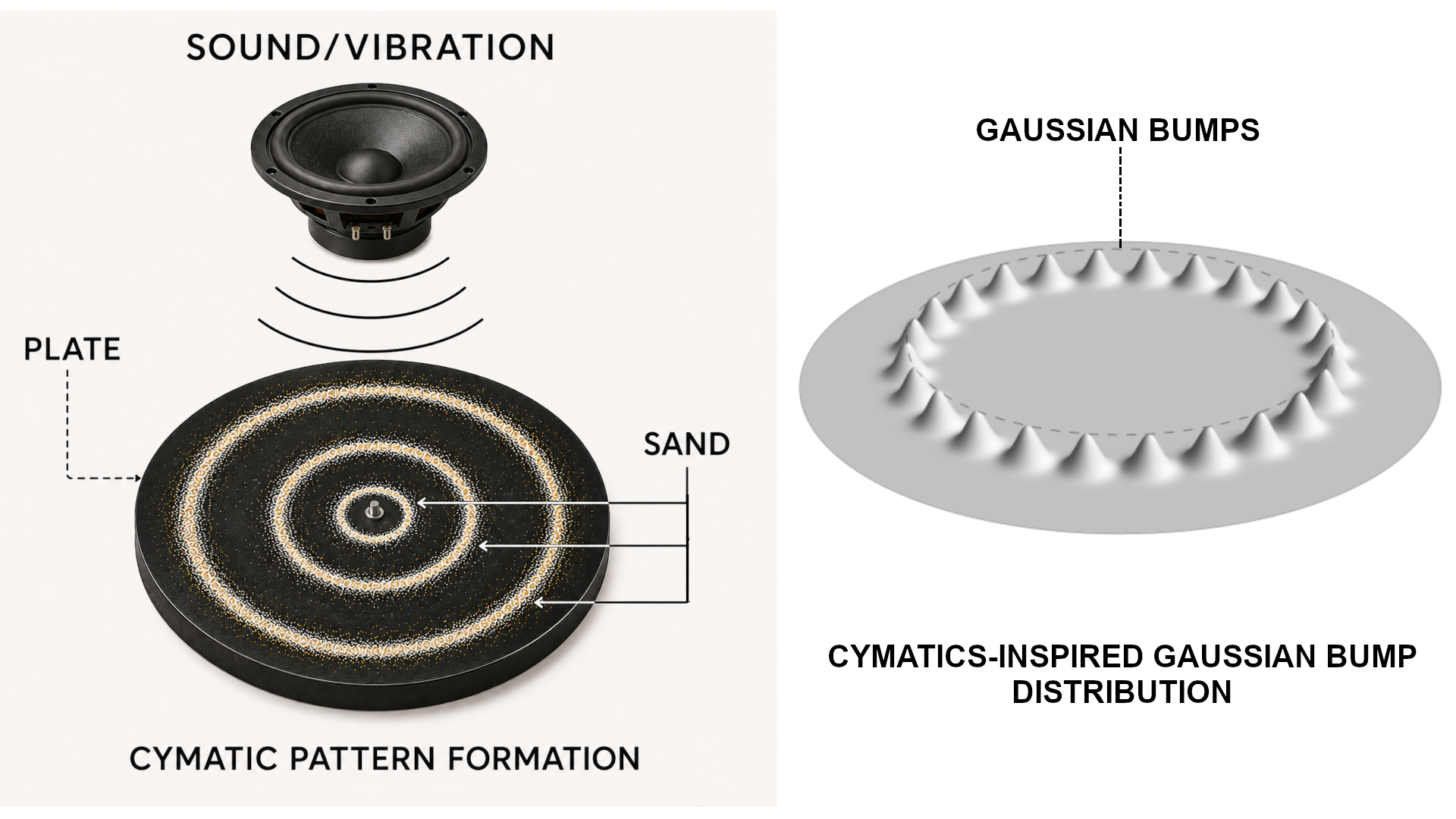
Chaos in cymatics-inspired Gaussian landscapes
Published: June 8, 2026
Abstract:
This paper presents a focused investigation of a conservative chaotic system, specifically within the context of a two-dimensional harmonic potential well. We analyse the emergence of chaos from a straightforward, non-chaotic harmonic potential well when subjected to perturbations introduced by two Gaussian-like terms in the system’s Hamiltonian. The Gaussian-perturbed system serves as a foundation for further inquiries rooted in the cymatics mechanism. In this study, we examine the effects of deformations arising from Gaussian perturbations on the development of chaotic dynamics. These deformations are produced through various configurations of Gaussian bumps in different geometric shapes, along with the modulation of the amplitude of the perturbed term shifting from positive to negative values.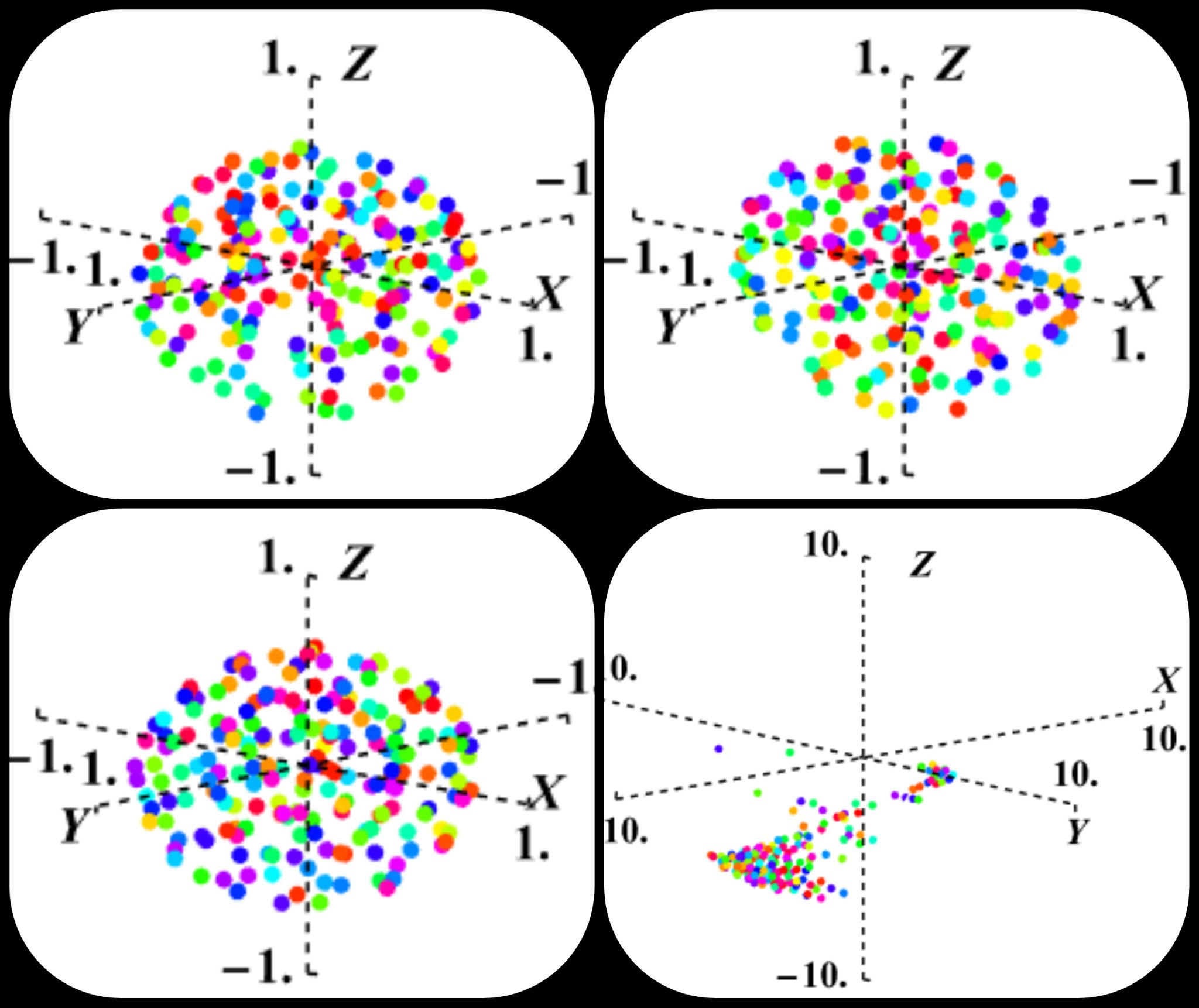
Cyclically symmetric Thomas oscillators as swarmalators: a model for active fluids and pattern formation
Published: August 14, 2025
Abstract:
In this study, we demonstrate that cyclically symmetric Thomas oscillators can serve as swarmalators—agents exhibiting both swarming and phase synchronization—when coupled with Kuramoto-type phase dynamics. The resulting model represents a nonlinear particle aggregation system, characterised by cyclic spatial symmetry and position-dependent phase evolution. This coupling gives rise to rich spatio-temporal phenomena, including pre-hexatic or hexatic 2D structures, as well as chaotic turbulence under extreme parameter regimes. These emergent patterns result from nonl inear self-organization, manifesting as a form of active turbulence. Our analysis reveals that the nature and strength of inter-particle interactions, controlled by key system parameters, dictate the organization and dynamical behavior of the swarm. As a representative active, non-equilibrium system, this framework provides insights into the fundamental mechanisms of collective motion and offers applications in the design of synthetic active materials and coordinated microscale systems.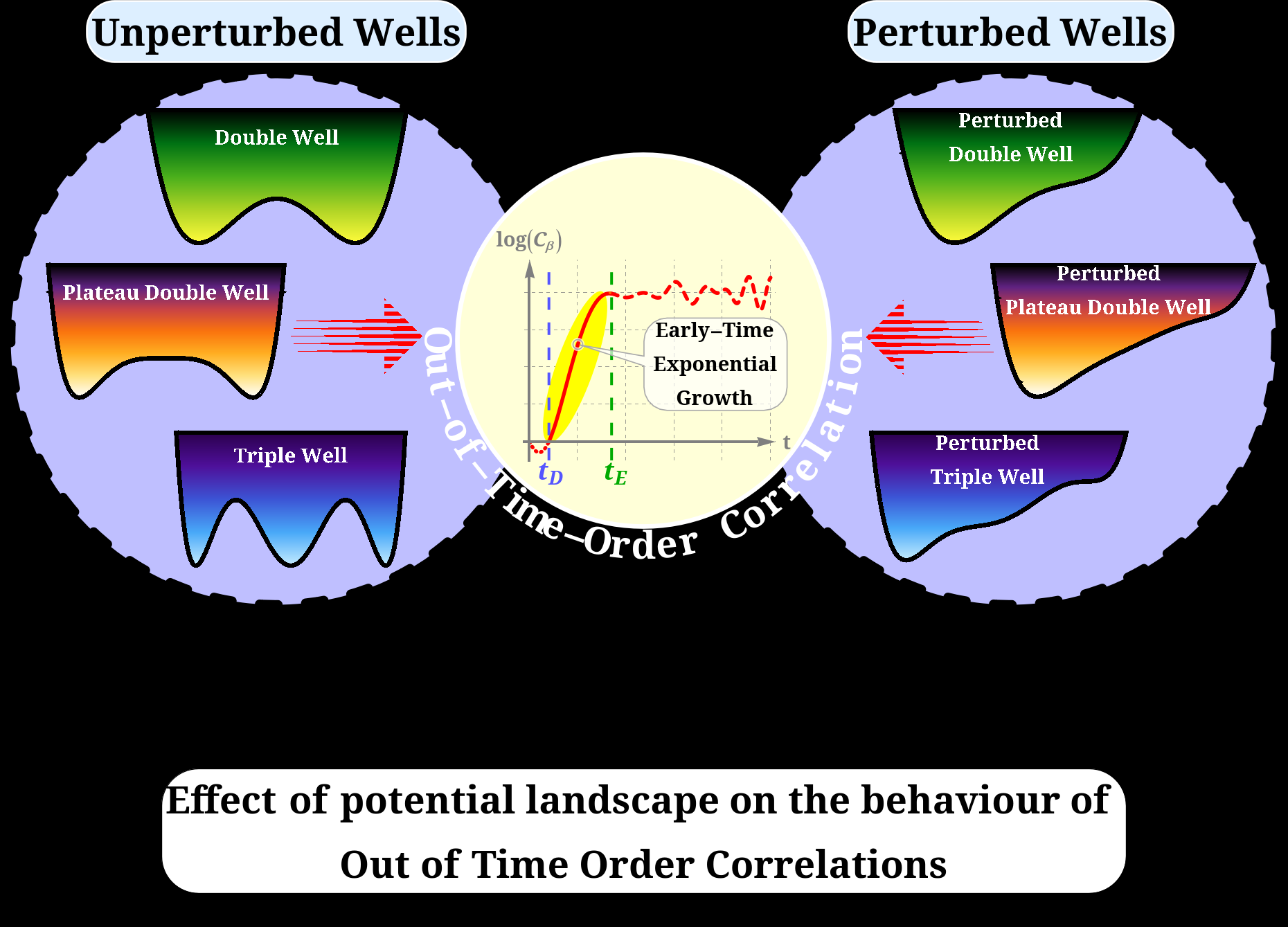
Out-of-Time-Order Correlation in perturbed quantum wells
Published: June 28, 2025
Abstract:
Out-of-Time-Order Correlator (OTOC) and Loschmidt Echo (LE) are commonly regarded as diagnostic tools for chaos, although they may yield misleading results, as we observe. Previous studies have concluded that OTOC shows exponential growth in the neighbourhood of a local maximum. If this statement holds true, the exponential growth should break off once the local maximum is no longer present within the system. By applying a small symmetry-breaking perturbation, we notice that the behaviour of the OTOCs remains remarkably resilient even in the absence of a maximum. Besides this, we also notice that with the increase in perturbation strength, the broken symmetric region expands, causing a broader range of eigenstates to engage in the exponential growth of OTOCs. Therefore, the critical factor lies not in the presence of a local maximum, but in the dynamic nature of the density of states in the broken symmetry regions. Our examination, spanning diverse one- dimensional potential landscapes, reveals the universality of this phenomenon. We also use other chaos diagnostic tool, LE. Interestingly, it also gives a false signal of chaos.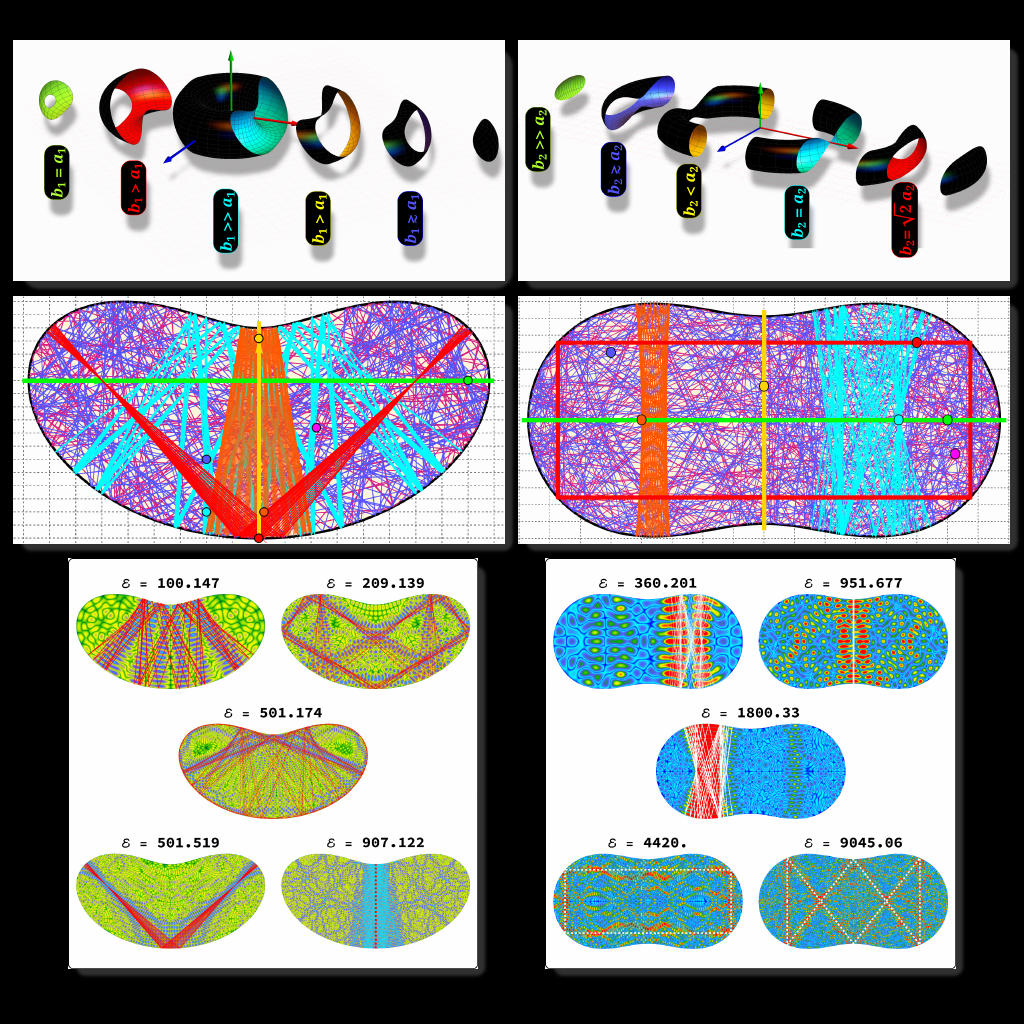
Classical and quantum chaos in bean- and peanut-shaped billiards
Published: January 15, 2025
Abstract:
The boundary of a billiard system plays a crucial role in shaping its dynamics, which may be integrable, mixed, or fully chaotic. When a boundary has varying curvature, it offers a unique setting to study the relation between classical chaos and quantum behaviour. In this study, we introduce two geometrically distinct billiards: a bean- and a peanut-shaped billiard. These systems incorporate both focusing and defocusing walls with no neutral segments. Our study reveals a strong correlation between classical and quantum dynamics. Analysis of billiard flow diagrams confirms sensitivity to initial conditions— a defining feature of chaos. Poincaré maps further show the phase space intricately woven with regions of chaotic motion and stability islands. We employ both statistical and dynamical measures to characterise quantum chaos. Statistical indicator includes nearest-neighbour spacing distribution, level spacing ratios, and spectral staircase function, while dynamical measures includes out-of-time-order correlators and spectral complexity. We also observe eigenfunction scarring in both the billiards.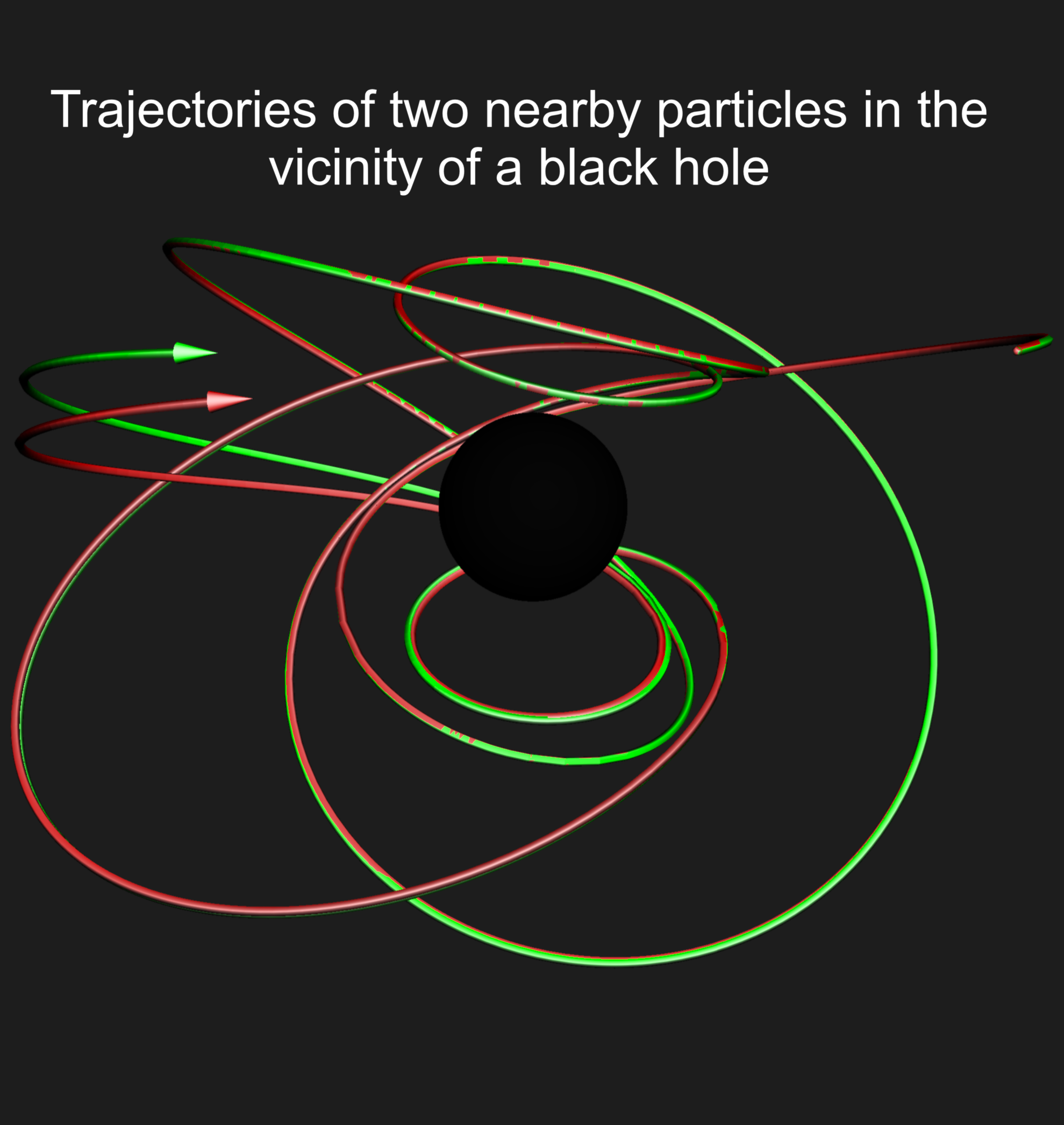
Interplay between the Lyapunov exponents and phase transitions of charged AdS black holes
Published: July 25, 2024
Abstract:
We study the relationship between the standard or extended thermodynamic phase structure of various anti–de Sitter black holes and the Lyapunov exponents associated with the null and timelike geodesics. We consider dyonic, Bardeen, Gauss-Bonnet, and Lorentz-symmetry breaking massive gravity black holes and calculate the Lyapunov exponents of massless and massive particles in unstable circular geodesics close to the black hole. We find that the thermal profile of the Lyapunov exponents exhibits distinct behavior in the small and large black hole phases and can encompass certain aspects of the van der Waals type small/large black hole phase transition. We further analyze the properties of Lyapunov exponents as an order parameter and find that its critical exponent is 1/2, near the critical point for all black holes considered here.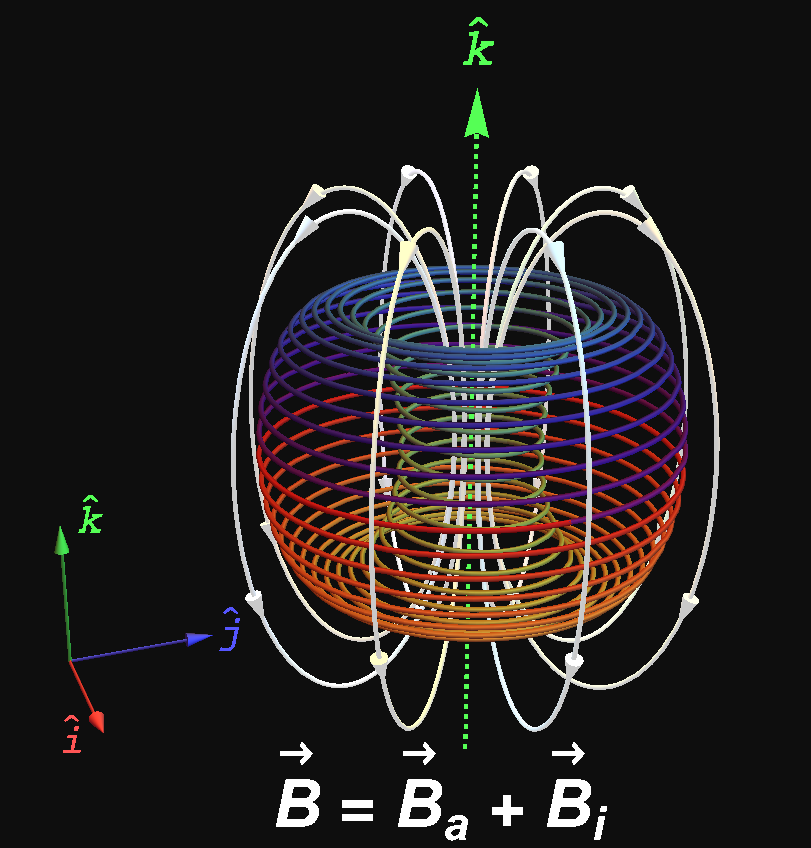
Dynamics of a charged Thomas oscillator in an external magnetic field
Published: October 27, 2022
Abstract:
In this letter, we provide a detailed numerical examination of the dynamics of a charged Thomas oscillator in an external magnetic field. We do so by adopting and then modifying the cyclically symmetric Thomas oscillator to study the dynamics of a charged particle in an external magnetic field. These dynamical behaviours for weak and strong field strength parameters fall under two categories; conservative and dissipative. The system shows a complex quasi-periodic attractor whose topology depends on initial conditions for high field strengths in the conservative regime. There is a transition from adiabatic motion to chaos on decreasing the field strength parameter. In the dissipative regime, the system is chaotic for weak field strength and weak damping but shows a limit cycle for high field strengths. Such behaviour is due to an additional negative feedback loop that comes into action at high field strengths and forces the system dynamics to be stable in periodic oscillations. For weak damping and weak field strength, the system dynamics mimic Brownian motion via chaotic walks. We claim that the modified Thomas oscillator is a prototypical model to understand the dynamics of an active particle.